
Same Child; Different Check

The state will pay a stranger to raise a child. It will often pay that child’s grandmother less—or nothing at all—to raise the very same child. That gap is not an oversight. It is the policy.
third in the series, How a Nation Outsources Its Conscience.

There is a number the state attaches to a child in foster care. It is a monthly payment, meant to cover what it costs to keep that child fed, clothed, warm, and safe. The number is not generous, but it exists, and it follows the child to whatever licensed home takes him in.
Unless the home belongs to his grandmother.
When a relative steps forward to raise a child the state would otherwise place with a stranger, the number very often shrinks, sometimes to a fraction, sometimes to nothing at all. It is the same child, with the same needs, on the same night. The only thing that has changed is that the person holding him loves him already. And the system has learned that love can be paid less, because love tends to show up anyway.
I am not writing this from the outside. I have sat in nearly every seat at this table. I have been the licensed foster parent who received the check. I have been the adoptive parent who stayed past the part where the paperwork ends. And I have been a parent on the other side of a placement I did not choose, which is the seat the policy world almost never hears from and the one that taught me the most. I am not going to narrate all of that here, because some of it belongs to children who are not me. But I will tell you that there is no part of this system I am guessing about.
The two checks
Look at what the gap actually is, because it is not rhetorical. It is printed.
In comments submitted to the federal government, one state described a child in a traditional foster home drawing between $544 and $656 a month, while that same child placed with an unlicensed relative drew $388. In Cuyahoga County, Ohio, a kinship caregiver receives $302 a month to raise one child, while a licensed foster home is paid a minimum of $624 and as much as $2,619.
Read those pairs again. The work is identical. The grocery bill is identical. The child’s needs are identical. The state has simply decided that the version of the arrangement where a relative does the caring is worth half as much, or less, to fund.
Federal courts have already recognized that this disparity can violate federal law. In D.O. v. Glisson, the court held that approved kinship caregivers were entitled to the same foster care maintenance payments as non-relative foster parents. It took a lawsuit to establish that a child is worth the same amount of money no matter who is holding him. That such a ruling was necessary tells you how natural the discount had come to feel.
Why the discount exists
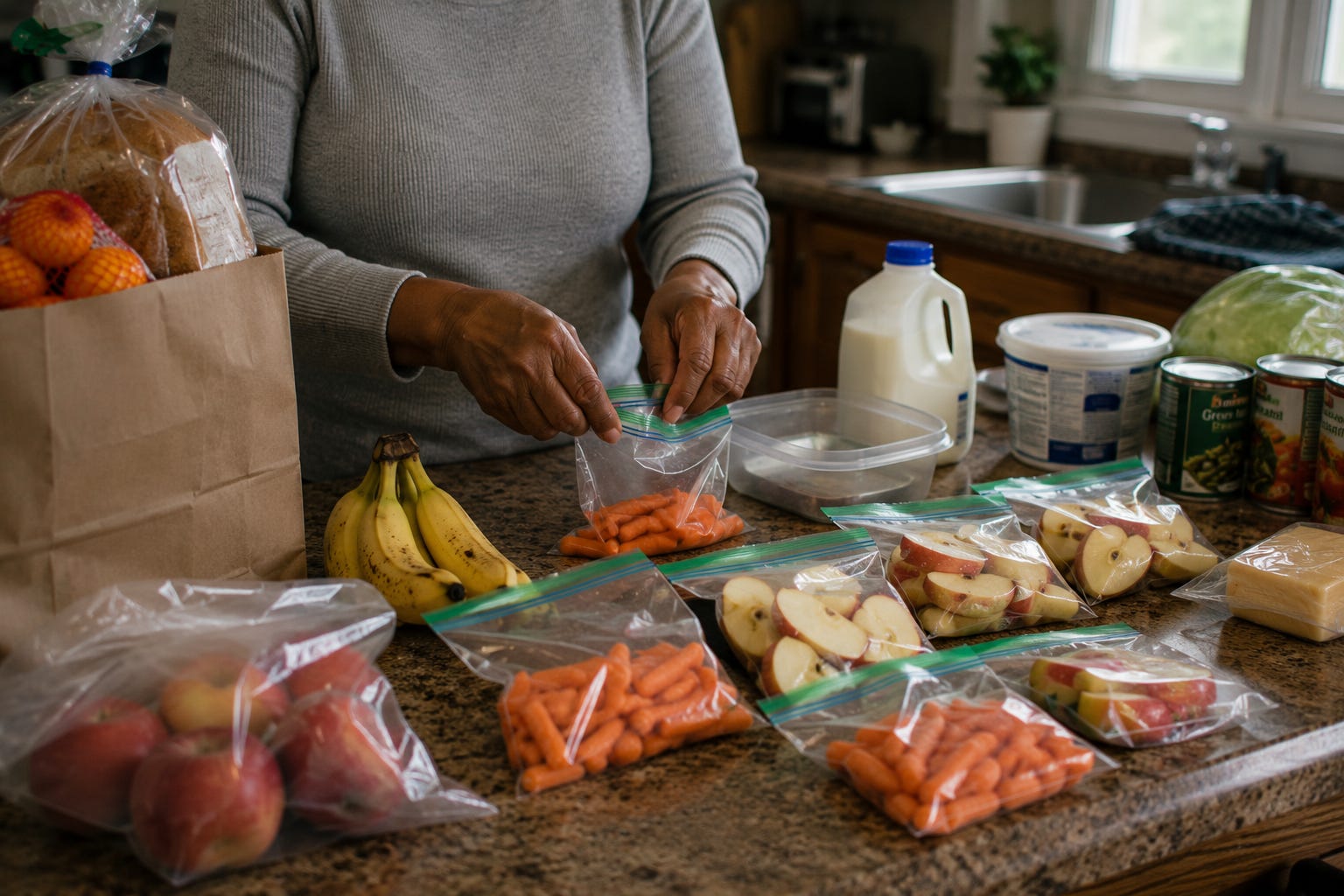
The reason the gap exists is not a mystery, and the people who run the system do not really pretend it is. It saves money. A grandmother who takes a child out of a motel placement and into her spare room has just removed a cost from a state budget, and she has done it for free or close to it.
One longtime caregiver in Phoenix put it plainly to reporters: over the years, she watched states reach for kinship care because it saves them a great deal of money, until it became a budget decision rather than a decision made to help the family. That is the whole thing in a sentence. The kindness of relatives became a line item the state could underfund on purpose, because the relatives would not stop showing up.
And the scale of what they absorb is enormous. About 2.5 million children in this country are being raised by a relative or close family friend with no parent in the home. For every one child a relative is fostering inside the system, nineteen more are being raised by kin outside it, usually with little or none of the support that follows a child placed with a stranger. By keeping those children out of formal foster care, these families save the government an estimated $10.5 billion a year.
That is the outsourced conscience in a single figure. Ten and a half billion dollars of care the public was spared from paying for, provided by people the public then declined to support. They are not saving the system by accident. The system is built to be saved by them.
The remedy that nobody is required to use
Here is the part that turns underfunding into something harder to forgive.
In 2023, the federal government changed the rule. It now allows states to create a simpler path for relatives to be licensed, and it lets states pay those licensed kin caregivers the same amount a stranger would receive for the same child. The remedy exists. It is sitting on the shelf, fully legal, federally blessed.
As of late 2025, roughly a dozen states had taken it up.
The government identified the disparity, wrote a fix, and made the fix optional, and most states looked at the option to stop paying grandmothers less than strangers and left it on the shelf. The discount survived even after someone handed every state in the country the eraser. A gap that persists when the remedy is free is no longer a gap. It is a preference.
I understood that difference differently after I became the licensed foster parent receiving the check. I knew what that money helped cover, and I also knew that if the same child had been placed with a relative who was not licensed, the need would not have changed. Only the state’s willingness to pay for it would have.
The same children, cut twice
Now ask who these children actually are, because it sharpens everything above.
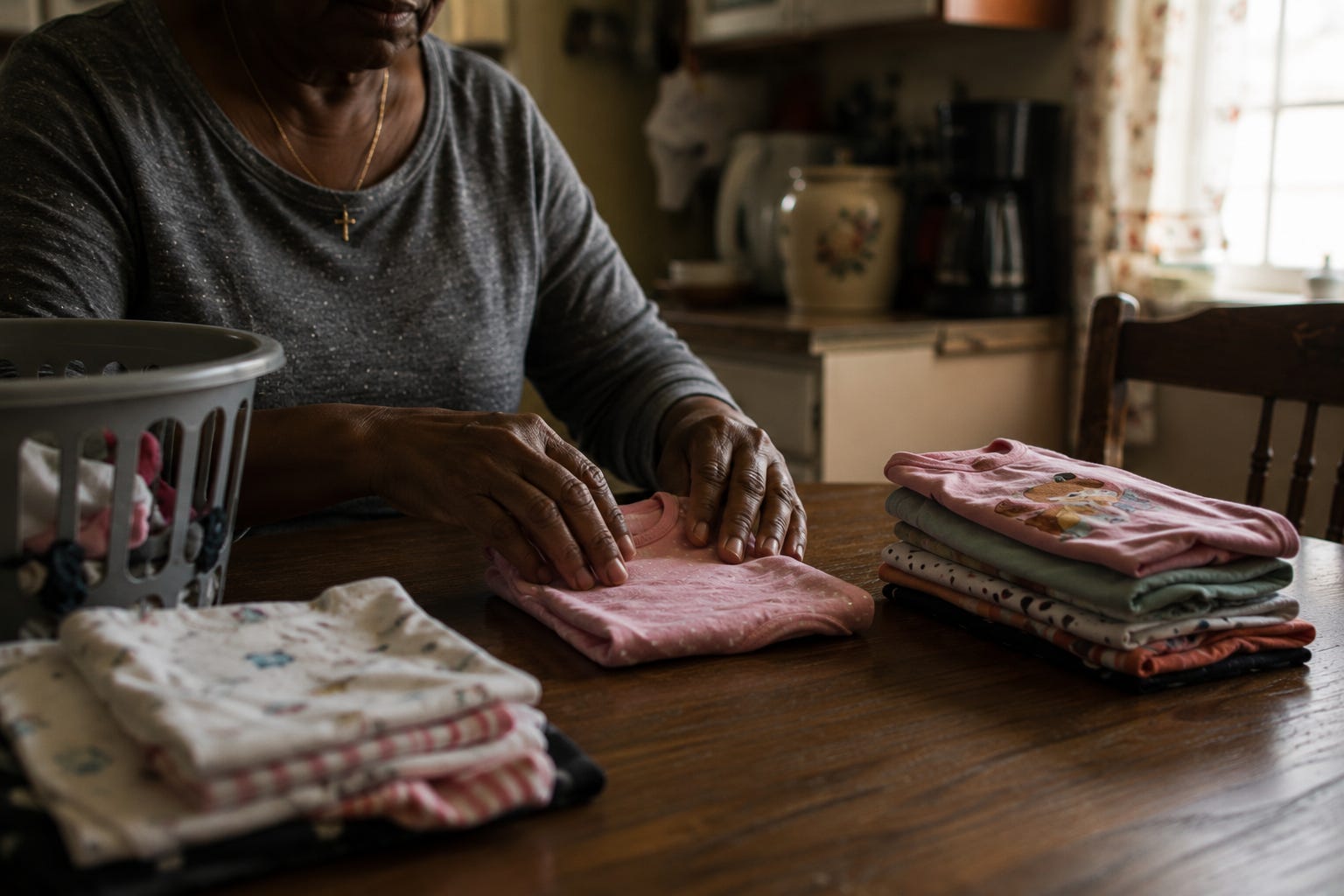
They do not arrive in a grandmother’s spare room from comfortable lives. They come from a parent’s overdose, a parent’s incarceration, a parent’s death or collapse, and they carry the medical and emotional weight of all of it. They are, almost by definition, the children who depend most on public coverage and food assistance. Medicaid is how their asthma, their dental work, and their trauma care get paid for. SNAP is part of how they eat. And the relative who takes them in is frequently living on a fixed or modest income herself, which is exactly why the missing foster payment cuts so deep.
So look at what the same government did in the summer of 2025. The reconciliation law signed that July included what analysts projected would become the largest reduction in Medicaid funding in the program’s history, close to a trillion dollars, projected to cost roughly 11.8 million people their health coverage. It paired that with the largest cut to SNAP in that program’s history, expected to take food assistance from more than two million people, about 800,000 of them children.
Then read the fine print, because it names these kids almost by hand. Among those who lost their exemption from the new SNAP work requirements are young people aging out of foster care. The children this system raised, the moment they walk out of it, are handed a paperwork test that can cut off their food. And the expanded work rules now reach caregivers of children fourteen and older, which means a grandmother raising a teenager can be put to that same test to keep the benefits feeding him.
So the state pays her less than a stranger to take the child, then trims the Medicaid and the SNAP that same child lives on, and still calls the arrangement a program that helps families. It cannot be all three. If these children are the ones the system says it exists to protect, it is fair to ask why they are so reliably the first the budget reaches for. The answer is uncomfortable, and it is the one this series keeps arriving at.
What it means to pay less for love
Go back to the frame this series is built on. A nation outsources its conscience when it keeps the obligation to care on the books and quietly transfers the cost of meeting it onto whoever stands closest to the suffering.
Foster care is the purest version yet, because here the transfer has a price tag printed right next to it. The teacher who buys the supplies is absorbing a cost the state never names. The daughter nursing her dying father is doing work the state never counts. But the grandmother is doing work the state counts precisely, prices, and then deliberately pays her less for than it would pay a stranger to do. The discount is not hidden in an unwritten assumption. It is written down. It is the difference between $656 and $388, applied on the grounds that she would have said yes anyway.
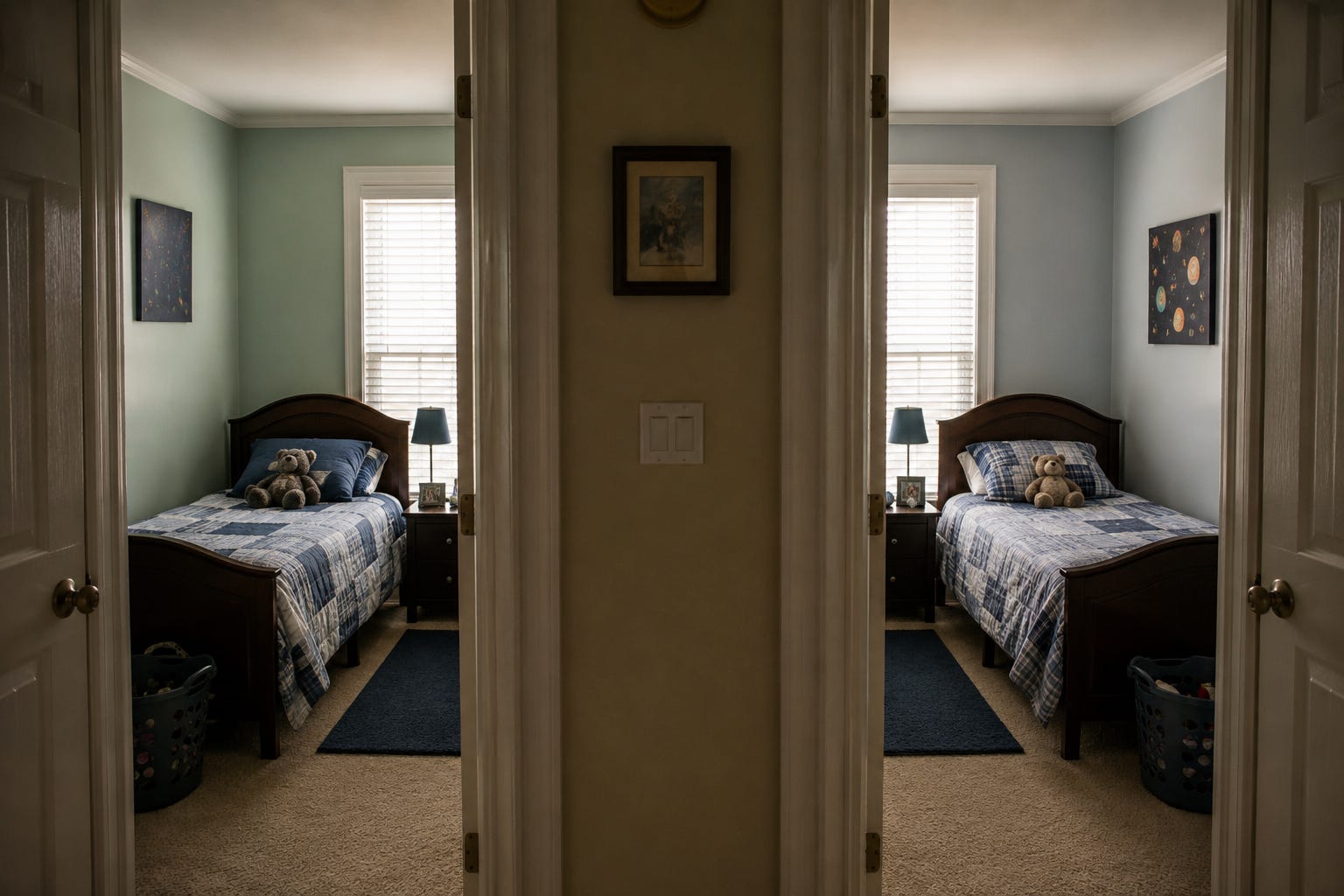
And she does say yes. That is the cruelty the numbers cannot hold. These caregivers step in on a few hours’ notice, rearrange a retirement, give up a spare room and a quiet decade, and take on a child in the middle of the worst week of that child’s life. They do it whether or not the check is fair, because the alternative is a stranger’s house across town. The state has read that devotion correctly and built a budget on top of it.
A country can call this a kinship-care program. It can call it family preservation. It can put a grandmother on a brochure and thank her in a proclamation every September.
But gratitude is not policy.
A system that prices a child’s care, then pays the people who love that child the least of anyone who could have done the job, has not honored the family. It has exploited it.
And that is the moral scandal at the center of kinship care: the state knows exactly what the child needs. It knows what that care costs. It simply believes a grandmother’s love should come with a discount.
That is not family preservation. It is family subsidy. The family preserves the state, while the state congratulates itself for preserving the family.